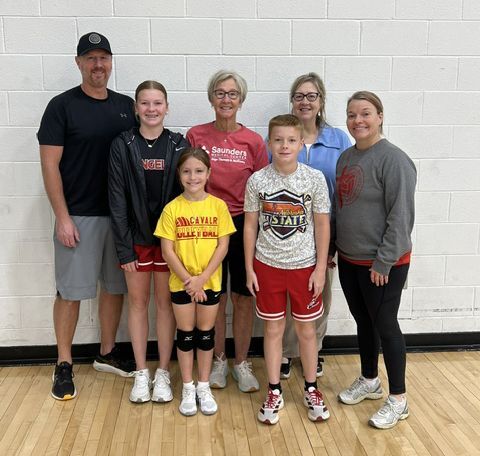
Life changed dramatically for Joyce Palensky overnight. After a sudden and frightening loss of balance, Joyce found her way back to independence through determination, family support and specialized vestibular rehabilitation at Saunders Medical Center.
A Story of Rehabilitation, Recovery, Adaptation & Regaining Independence
One Day Everything Changed. But She Worked Her Way Back.
Joyce Palensky has always been active. She enjoys working in her yard, going to church, spending time with her grandchildren, and getting out with family and friends. She had never been one to slow down.
Then, in January 2026, everything changed in an instant.
Joyce had gotten up quickly from bed one morning while her grandchildren were staying with her. She sat on the edge of the bed, feeling dizzy, and her vision was blurry. She slowly made her way downstairs, where her grandson noticed that she wasn't feeling right. Joyce made breakfast and eventually fell asleep in her recliner.
As the morning progressed, however, she became nauseated and developed a headache. Her ability to walk continued to deteriorate until she could no longer safely make it to the door and had to crawl.
Her family feared she was having a stroke.
Joyce was taken to a hospital in Lincoln, where she underwent a CT scan, MRI and other testing. She remained there overnight for observation. While the initial testing did not reveal a large, obvious stroke, it was clear that something was wrong. Joyce wasn't improving, and she was discharged needing a walker and assistance with basic activities she had previously done without thinking.
"I felt there was more we needed to do for mom," said her daughter, Sandi Palensky, a registered nurse, who knew her mother needed specialized rehabilitation.
Specialized Care, Close to Home
Saunders Medical Center's Edge Therapy & Wellness physical therapy team recommended outpatient vestibular rehabilitation and explained that not every clinic has a physical therapist with specialized training in vestibular therapy.
As a family, they hoped Joyce could receive her therapy at Saunders Medical Center. The family had previous experience with SMC and knew Joyce would be comfortable there.
“I called Saunders Medical PT and was told that they did have a PT who had the specialty vestibular training my mom needed!” Sandi said. “It was a relief to hear this and know that it could be done locally at a facility she was familiar with.”
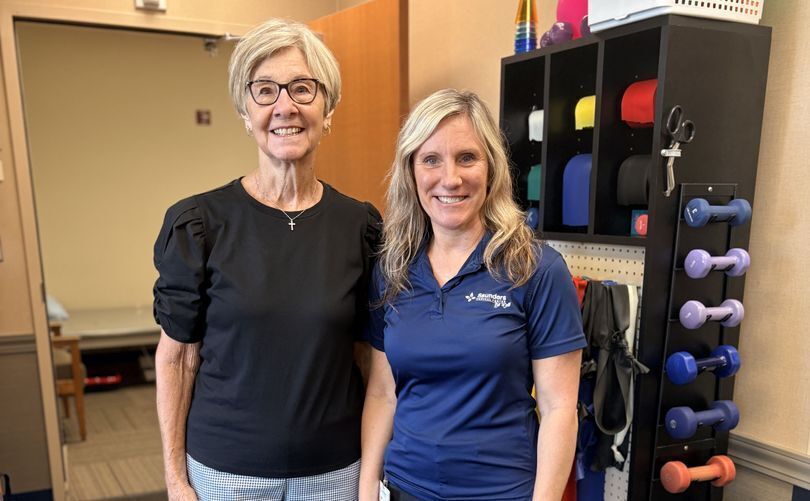
That physical therapist at SMC was Amy Dunlap, PT, who is certified in vestibular rehabilitation through the American Institute of Balance.
When Joyce began working with Amy in February, there were still many unanswered questions about what was causing her severe balance and coordination problems. The additional evaluation helped provide a clearer picture, allowing Amy to tailor Joyce's rehabilitation to her specific needs.
Joyce had experienced a small vascular insult to the cerebellum, the part of the brain that plays an important role in coordination and balance. She also had peripheral vestibular dysfunction affecting both sides of the system responsible for balance. Vestibular problems commonly affect one side, so having dysfunction on both sides made Joyce's recovery particularly challenging.
For Joyce, this meant that getting back to her normal life would take more than time. It would take specialized rehabilitation, a carefully designed treatment plan, and a great deal of work.
Therapy Built Around Real Life
From February through May, Joyce attended physical therapy three times a week for approximately 45 minutes. But the work didn't stop when she left Saunders Medical Center. Much of her recovery each week happened at home, where Joyce spent an hour to an hour and a half each day completing exercises and challenging herself.
Amy tailored Joyce's therapy to her actual life rather than relying solely on a standard set of exercises. They worked on balance beams and obstacle courses and incorporated cognitive and movement challenges. If Joyce had an upcoming activity that made her anxious, Amy found ways to incorporate that situation into the therapy program.
“It wasn't just textbook, you know, look from here to there, now stand up, now you're done,” Amy said. “We did a lot of creative treatments, a lot of real-world environment situations.”
That individualized approach helped Joyce work toward the things that mattered most to her.
She wanted to enjoy summer, work in her yard, attend church, go to the dark movie theatre, spend time with her grandchildren and get back to the active life she knew.
“I was always hopeful,” Joyce said. “I felt the harder I worked at home, I could see more progress.”
Amy saw that commitment, too. Joyce had a large binder filled with the exercises Amy had prescribed for her to complete at home.
“That’s why you were so successful! You worked hard each day, in addition to our therapy here,” Amy told her.
Joyce eventually developed a routine that made the exercises easier to manage.
“Once I got into it, and I kept more of a routine, it was easier,” Joyce said.
Progress Measured in Everyday Moments
One of Joyce's biggest milestones was no longer needing her walker.
From there, she continued challenging herself in everyday situations. Going to a movie became one assignment. Attending church and receiving Communion presented another challenge. She worked through the anxiety and kept going.
Then came her granddaughter's birthday.
Joyce wanted to drive to Lincoln, spend time with her granddaughter and go shopping together.
She did it—and had fun.
Those ordinary activities became important milestones in Joyce's recovery. She wasn't simply improving on a therapy exercise. She was getting back to the life she loved.
Joyce completed her formal physical therapy in May. When she returned to Saunders Medical Center in August, Amy hadn't seen her in person since the end of her therapy.
The difference was remarkable.
“I would have never known that she had any type of unsteadiness or balance issues,” Amy said. “Today I didn't see it at all. It is amazing!”
For Amy, seeing Joyce again was validating—not only because of the progress Joyce had made, but because it showed how much the work they had done together had translated into everyday life success.
Joyce took the exercises and strategies from therapy and continued using them in the real world.
Regaining Independence
For Joyce, the experience also changed the way she viewed healthcare close to home. She discovered that the specialized care she needed was available right here in Wahoo.
But convenience wasn't the only thing that mattered.
Joyce talked about knowing many of the people she sees at Saunders Medical Center and seeing familiar faces in the waiting room. She appreciated knowing who would be caring for her and having the same therapist throughout her recovery.
“You feel like a person,” Joyce said. “They make you feel very comfortable, and they care about YOU. They give you the best care here.”
That familiarity was important—but so was the continuity of professional care.
Amy was able to observe Joyce's progress from the moment she walked through the door to the moment she left, learning what was normal for Joyce and recognizing when something was different.
“Continuity of care is key to having your success when you've got that same person,” Amy said.
For Joyce, that combination of specialized expertise, individualized therapy and consistent care helped turn a frightening and uncertain beginning into a remarkable recovery.
Sandi is grateful that specialized care was available so close to home. As a registered nurse herself, she understands the importance of having access to specialized healthcare services in the community.
“My mom is back walking independently and her balance and coordination are very strong,” Sandi said. “She has returned to her highly active lifestyle and enjoying her outings with family and friends, and regaining full independence.”
Sandi credits Amy's specialized vestibular therapy skills, encouragement, and commitment as important parts of her mother's recovery.
“It has been an incredible recovery journey, and we are deeply grateful for SMC and Amy's expertise and commitment throughout my mother's rehabilitation,” Sandi said. “Her specialized vestibular therapy skills, encouragement, and determination helped my mother progress from requiring a walker at all times to walking independently and returning to the life she loves.”
Seek Saunders Medical Center's Professional Team
When asked what she would recommend to someone facing a health challenge, Joyce's answer was simple.
“I'd say contact your family doctor at SMC. They truly go the extra mile. I also always encourage them to go to SMC for their physical therapy.”
After everything Joyce experienced, she has a new appreciation for the care available in her own community.
She came to Saunders Medical Center needing specialized care for a complicated balance disorder. She left with something much bigger: the ability to walk independently, return to the activities she loves, and live her life with confidence again.
"As an RN myself, I highly recommend the physician care of SMC and the Physical and Occupational therapy team. It is invaluable to have the quality of services locally here in the Wahoo community," said Sandi.
"I'm so thankful for SMC being here!" said Joyce. It was a long road back. But Joyce didn't have to travel it alone—and she didn't have to travel far from home!
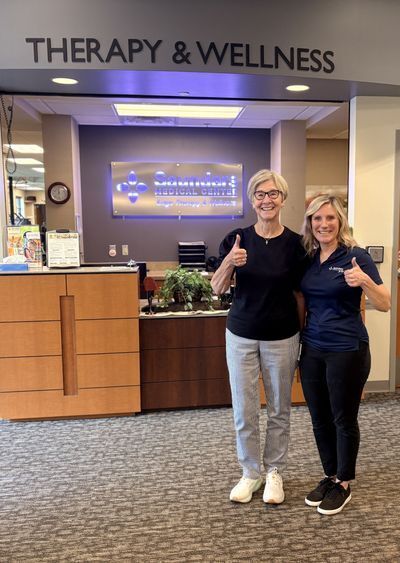
Joyce and Amy Dunlap, PT, who is certified in vestibular rehabilitation.